
FIREARMS
A closer look at the safety controversy, technical questions and the challenges of evaluating unintended discharges.
The SIG Sauer P320 has become one of the most recognisable modular handgun platforms in the modern firearms industry. Its adoption by military and law enforcement organisations established its position in the service-pistol market. However, reports of unintended discharges have raised questions about safety, technical reliability and the challenges of investigating incidents involving complex mechanical systems.
This article examines the controversy, the competing explanations surrounding reported incidents and the wider implications for manufacturing quality, product safety and professional firearm procurement. Allegations and technical hypotheses are distinguished from established findings wherever the available evidence requires caution.
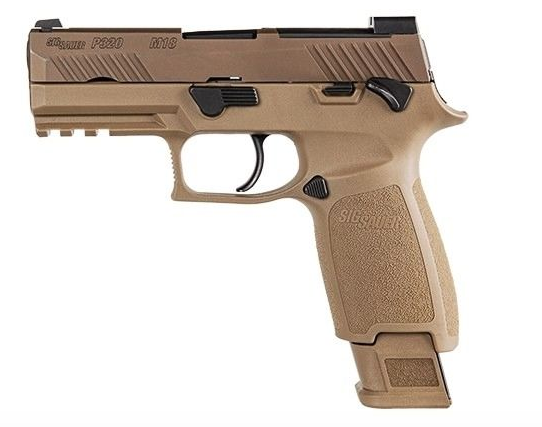
Copyright Sig Sauer
KEY TAKEAWAYS
- The original drop-safety controversy and later reports of unintended discharges are separate issues that should not automatically be attributed to the same cause.
- Reports, allegations and proposed technical explanations require careful evaluation against the evidence available in each case.
- Modular firearm designs place particular importance on component compatibility, manufacturing controls and quality assurance.
- Independent technical examinations are essential when the cause of a reported discharge remains disputed.
IN THIS ARTICLE
- A Success Story Facing Difficult Questions
- The Importance of Mechanical Safety
- Beyond the Original Drop-Test Controversy
- Competing Explanations and the Need for Evidence
- The Modular Architecture
- A Technical Theory That Requires Verification
- Manufacturing Standards and Quality Assurance
- Implications for Professional Users
- VOID-MAG Conclusion
A Success Story Facing Difficult Questions
When the US Army selected SIG Sauer’s P320-based M17 and M18 pistols in 2017, the decision marked a major milestone for the manufacturer. The new handguns were intended to replace the Beretta M9 and introduce a more adaptable platform into military service.
The P320 offered several attractive features, most notably its modular architecture. Its central fire-control assembly could be transferred between compatible grip modules, allowing different configurations to be built around the same core component.
The platform’s military selection significantly raised its profile. However, widespread institutional adoption also meant that its design would be examined under demanding operational conditions. Questions about safety emerged soon after the initial procurement announcement, beginning a controversy that would extend beyond the original technical concerns.
The Importance of Mechanical Safety
In 2017, reports emerged that certain P320 pistols could discharge during drop testing without deliberate trigger input. The issue attracted considerable attention because resistance to accidental discharge is a fundamental requirement for any firearm intended for professional service.
A handgun may be exposed to sudden impacts, falls and other unpredictable forces during everyday handling. Its safety mechanisms must account for these conditions without depending solely on the user maintaining perfect control of every movement.
SIG Sauer subsequently introduced a voluntary upgrade programme intended to address the identified concerns. The modifications included changes to the trigger and components of the firing mechanism.
This episode established an important distinction that remains relevant to the wider discussion: addressing a specific safety issue does not necessarily explain every subsequent incident involving the same firearm platform.
Beyond the Original Drop-Test Controversy
In the years following the initial reports, additional allegations involving unintended discharges attracted attention in the United States. Some incidents reportedly occurred while pistols were being carried in holsters.
Such accounts raised questions different from those associated with the original drop tests, particularly where the circumstances did not involve an obvious impact or a reported deliberate trigger pull. Individual cases have generated media coverage, legal claims and competing interpretations of the available evidence.
One publicly discussed incident involved officers from the Montville Police Department in Connecticut. SIG Sauer questioned the circumstances surrounding the event and pointed to the possibility of improper holstering. The precise cause must be evaluated against the available evidence rather than inferred solely from the fact that a discharge occurred.
Video footage can help establish a sequence of events, but it does not necessarily reveal what happened inside a firearm’s mechanism. Similarly, individual accounts are relevant evidence but do not, by themselves, establish a definitive engineering explanation.
Competing Explanations and the Need for Evidence
SIG Sauer has disputed claims that the reported incidents demonstrate a general defect affecting the P320 platform. In different cases, explanations involving handling, holster compatibility or other external circumstances have been raised.
Critics, meanwhile, have questioned whether the available explanations adequately account for all reported events. These competing positions cannot be resolved simply by counting media reports or examining the outcome of individual lawsuits. Each incident may involve different circumstances, and the evidence available in one case may not apply to another.
Legal proceedings also require careful interpretation. A settlement does not automatically establish that a product was defective, just as the absence of a judicial finding against a manufacturer does not independently prove that every technical concern is unfounded.
Questions That Matter
- Was the firearm examined by an independent technical specialist?
- Were its components identified and documented?
- Was the reported sequence of events assessed under controlled conditions?
- Were alternative explanations considered systematically?
- Did the investigation establish a direct link between a specific component and the discharge?
Without reliable answers, broad conclusions about the entire platform remain difficult to justify.
The Modular Architecture
The P320’s modular design is central to both its commercial appeal and its engineering complexity. Its Fire Control Unit (FCU) houses the principal components of the trigger and firing mechanism. The unit can be removed from the grip module and installed in compatible configurations.
This approach offers practical advantages in manufacturing, maintenance and configuration. However, modularity also places greater importance on component identification, compatibility controls and correct assembly.
Parts that appear similar are not necessarily interchangeable. Differences in dimensions or geometry can matter when dealing with components responsible for preventing an unintended discharge.
A Technical Theory That Requires Verification
One hypothesis discussed in online technical material concerns the takedown safety lever within the FCU. The theory suggests that visually similar components intended for different calibre configurations could potentially be confused.
According to this hypothesis, installing an incompatible component might alter the relationship between internal parts and affect the engagement of the firing-pin safety. The actual effect, if any, would need to be established through a controlled technical examination.
EDITORIAL NOTE
The proposed component-compatibility explanation should not be treated as a confirmed cause without reliable supporting evidence. The existence of a theoretical mechanism does not prove that an incorrect component was installed during production or that it explains any particular incident.
A credible conclusion would require physical evidence from the firearm concerned, accurate identification of the installed components and an assessment by qualified specialists.
Manufacturing Standards and Quality Assurance
The wider debate highlights a principle that applies to every safety-critical engineering product: design quality must be supported by reliable manufacturing and inspection procedures.
A component may perform as intended when correctly manufactured and installed, yet still present a risk if compatibility requirements are not adequately controlled. For a modular firearm, effective quality assurance should address component identification, assembly controls, final inspection, traceability and the systematic investigation of reported incidents.
These principles do not establish that a particular manufacturer has failed to meet its obligations. They identify the questions that become relevant whenever a safety-critical product is subject to credible technical concerns.
Implications for Military and Law Enforcement
For organisations issuing firearms to personnel, the controversy illustrates why procurement cannot end when a contract is awarded. Initial qualification tests are essential, but long-term confidence also depends on operational feedback, maintenance procedures, incident reporting and the ability to investigate emerging safety concerns.
Authorities need procedures for documenting incidents, preserving evidence and determining whether corrective action is necessary. Manufacturers, in turn, have an interest in ensuring that technical concerns are investigated using reliable evidence and communicated clearly.
For individual users, any suspected safety issue should be handled through established safety procedures and referred to a qualified professional. Attempting to diagnose or modify a potentially affected firearm without appropriate expertise can introduce additional risks.
VOID-MAG Conclusion
The SIG Sauer P320 remains an important example of the modern modular-pistol concept. Its adoption by military and law enforcement organisations demonstrates the significance of its design and market position. At the same time, the safety debate highlights the responsibilities that accompany widespread use of a safety-critical product.
The decisive questions are whether specific failures can be demonstrated, whether their causes can be established and whether effective measures exist to prevent recurrence.
A rigorous assessment must examine each issue on its own evidence. Allegations require substantiation, but technical concerns should not be dismissed without a meaningful examination of the available facts.
VOID-MAG VERDICT
A manufacturer’s reputation may establish initial trust. Only verifiable performance can sustain it.
VOID-MAG.com — Independent perspectives on firearms, technology and the defence industry.